Crime Scene Investigation
Note: information on SkillsUSA sites or publications superceeds any information listed here
Contest Information
Note: Check the tech standards on the SkillsUSA site for the most up to date content
To review the tech standards on the SkillsUSA site. Industry folks – reach out and we can help you get a copy of them.
Here is some supplementary information about the competitions.
APPENDIX A
Below is a list of terms to prepare for the knowledge test. The list below is not exhaustive, but represents the range of possible content.
- Algor Mortis
- Blank samples
- Bindle paper
- Chain of custody
- Circumstantial evidence
- Comparison samples
- Control samples
- Crime scene measuring techniques (triangulation method, rectangular coordinate method, transecting baseline coordinate method, polar coordinate method)
- Crime scene photographs (overall, midrange, close-up)
- Crime scene search methods (grid search, spiral search, lane/strip search, zone search)
- Crime scene security log
- Direct evidence
- Elimination samples
- Exculpatory evidence
- Faraday bags
- Forensic archaeology
- Forensic entomology
- Forensic odontology
- Forensic pathology
- Fruit of the Poisonous Tree Doctrine
- Inculpatory evidence
- Latent fingerprints
- NDIS/CODIS
- Oblique lighting
- Patent fingerprints
- Post-mortem lividity
- PPE
- Presumptive tests
- Prioritization of evidence collection
- Processing/collection methods
- Proper packaging of various types of evidence (drugs, biological material, firearms, knives, _________________)
- Reference samples
- Rigor mortis
- Routes of exposure
- Standards of proof (probable cause, reasonable suspicion, proof beyond a reasonable doubt, preponderance of the evidence)
- Statutory/common law
- Transient evidence collection
APPENDIX B
The list below is not exhaustive, but represents the range of possible competition skills
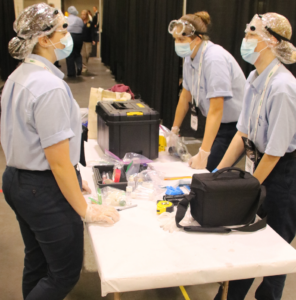
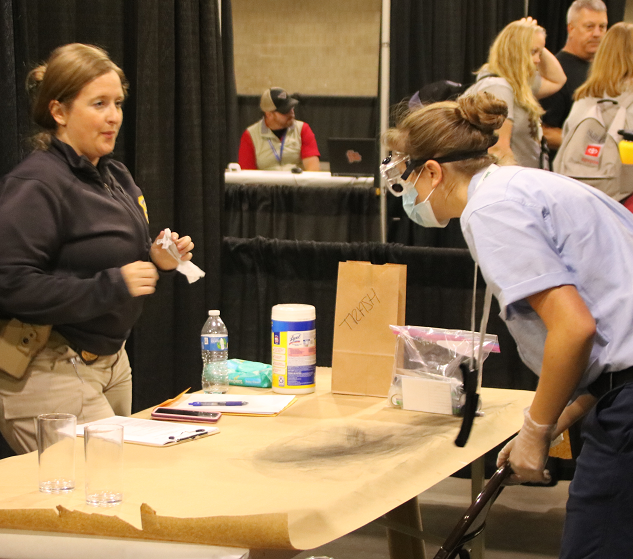
- Lifting fingerprints
- Collecting DNA and bodily fluid evidence
- Photographing scene
- Photographic evidence
- Sketching a scene
- Measuring a scene
- Using alternative light sources
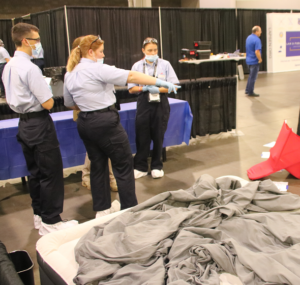
- Searching for and identifying evidence
- Identify, collect, and process trace evidence
- Interpret blood stains
- Interpret ballistic evidence – casings, directionality, sequencing
- Complete paperwork associated with CSI – including narratives, logs
- Practice safety protocols related to CSI
- Collect evidence
- Verbalize constitutional and legal applications in scenarios
- Interpret DNA evidence
- Classify, interpret and identify fingerprint evidence
- Packaging and preserving various types of evidence
- Presumptive testing
- Interpretation of anthropological evidence