Law Enforcement Pathway
Prepare students for careers in law enforcement and public safety through hands-on learning in policing, criminal law, investigations, communication, ethics, and community engagement.
This pathway is designed for Law and Justice CTE programs and law enforcement career academies.
Pathway at a Glance
Recommended Grades: 9–12
Program Length: 3–4 courses
Credential Opportunities: National Law Enforcement Cadet Certification (NLEC) + Multiple Certifications and Micro-Credentials
Student Organization: SkillsUSA
Work-Based Learning: Local, state, and federal law enforcement agencies; sheriff’s offices; campus and school-based law enforcement; courts; public safety agencies; and related criminal justice organizations.
Course 1 Introduction
- Introduction to Law and Public Safety (ILPS)
Course 2 Core
- Foundations of Law Enforcement (FLE)
Course 3+ Extension Options
- Criminal & Constitutional Law (CCL)
- Drones for Law & Public Safety (DLPS)
- Foundations of Criminal Investigations (FCI)
- Foundations of Detention and Corrections (FDC)
- Foundations of Forensic Science (FFS)
- Foundations of Emergency Communications & Dispatch (FECD)
- Foundations of Emergency Management & Homeland Security (FEMHS)
- Foundations of Emergency Medical Services (FEMS)
- Foundations of Security & Protective Services (FSPS)
Why This Pathway Is Designed This Way
The LAPSEN Law Enforcement Pathway was developed with extensive input from law enforcement leaders, public safety professionals, and educators. That input consistently emphasized that high school programs should focus on career exploration, strong fundamentals, employability skills, and preparation for the next step—not advanced police training better suited for an academy or postsecondary program.
Students begin with a broad understanding of law and public safety, teamwork, communications, career options, and workplace skills before developing more focused knowledge of law enforcement operations, procedures, and foundational skills.
Rather than adding increasingly advanced policing courses, the pathway encourages students to broaden their preparation through areas such as emergency communications, constitutional law, investigations and forensics, homeland security, or emergency medical services. This approach gives students a stronger understanding of the public safety system while preparing them for employment, an academy, or continued education after graduation
Introduction Course
Industry and advisory committees helped craft our approach to pathways. LAPSEN recommends a common introduction course across all law and public safety pathways. Our course model begins with Introduction to Law & Public Safety, which provides a broad foundation across the public safety pathways and helps students discover where their interests lie
Introduction to Law & Public Safety (ILPS)
Recommended introductory course
Introduction to Law & Public Safety gives students an exciting, hands-on introduction to the full range of public safety careers rather than focusing on a single profession. Students learn how law enforcement, fire, EMS, emergency communications, emergency management, security, corrections, and other disciplines work together while building practical skills through simulations, scenarios, and team-based activities. The course can incorporate CERT, Stop the Bleed, 9-1-1 communications, CPR/AED, FEMA training, and other credential opportunities, giving students meaningful accomplishments while they explore future pathways. Most importantly, students experience how modern public safety actually works and can make a more informed decision about which pathway they want to pursue next.
Standards & Course Guide | LAPSEN Lesson Plans | Course Resources
Core Course
The core course serves as the anchor of each pathway, providing students with the essential knowledge and skills of that profession. It goes beyond career exploration to cover the key concepts, practices, and hands-on competencies students need at an appropriate depth to build a strong foundation for advanced coursework and career preparation.
Foundations of Law Enforcement (FLE)
Recommended core course
Students explore the roles, responsibilities, and career opportunities of law enforcement officers while developing foundational skills in patrol operations, criminal law, traffic enforcement, investigations, report writing, ethics, and community policing. Through hands-on scenarios and practical activities, students apply concepts related to calls for service, arrests, search and seizure, crime scene response, interviewing, and police communications. Career planning and professional expectations are integrated throughout the course to prepare students for continued education, academy training, or entry into the public safety workforce.
Standards & Course Guide | LAPSEN Lesson Plans | Course Resources
Extention Courses
Extension courses build beyond the core by allowing students to develop deeper expertise within their pathway or gain complementary skills from related public safety fields. Guided by industry needs, these courses provide a broader, more complete education and help students understand how different public safety professions work together. This flexibility allows schools to design advanced coursework that best supports student interests, local workforce needs, and career goals. Click on the course abbreviations to learn more.
- Criminal & Constitutional Law (CCL)
- Drones for Law & Public Safety (DLPS)
- Foundations of Criminal Investigations (FCI)
- Foundations of Detention and Corrections (FDC)
- Foundations of Forensic Science (FFS)
- Foundations of Emergency Communications & Dispatch (FECD)
- Foundations of Emergency Management & Homeland Security (FEMHS)
- Foundations of Emergency Medical Services (FEMS)
- Foundations of Security & Protective Services (FSPS)
Credentials & Certifications
Credentials matter because they give students a meaningful way to demonstrate their knowledge and skills beyond the classroom. LAPSEN works closely with industry partners, professional organizations, subject-matter experts, and educators to identify and support respected certifications and credentials that align with each pathway. Whether offered by LAPSEN or one of our partner organizations, we take credential quality and industry relevance seriously so students earn recognition that supports their next step in education or a career.
Explore our Credentials & Certifications page to learn more about industry-recognized credentials, certification opportunities, and LAPSEN’s credentialing partners.
Tier 1
These credentials require limited training — usually less than 5 hours — and focus on a specific set of skills. While valuable for building a foundation, these skills alone are not enough to secure employment. These are the lowest tier of credentials. Review the full microcredentials list.
LAPSEN Microcredentials Law Enforcement Sets
LE Basic Set
Booking Procedures
Field Interviews
Basic Narrative
Basic Handcuffing
Narcan Administration
Radio Communication
Search of Person
Officer Set
Map Reading
Securing a Crime Scene, Establishing a Perimeter
Report Writing & Information Elicitation
Traffic Accident Reports
Warrants and Affidavits
Court Testifying
Fire Extinguisher
Patrol Set
Defensive Tactics
Basic Vehicle Approach
High Risk Stop
Batons
Building Clearance and Search
Standardized Field Sobriety Testing
Tier 2
Requiring 5 to 40 hours of training, these credentials combine multiple skills and demonstrate a student’s commitment to an area of learning. While they do not directly guarantee a job, they represent a significant step toward workforce readiness. Review more about Certifications.
- OSHA 10-Hour General Industry: Public Safety: Law Enforcement, Corrections, Security from CareerSafe
- FEMA Independent Study Program
- An Introduction to Hazardous Materials IS-15.a
- FEMA IS 100
- FEMA IS 200
- FEMA IS 700
- FEMA IS 800
- FEMA IS 242
- Introduction to Rail Safety
- CPR/First Aid
- Stop the Bleed
Tier 3
The highest level, these credentials reflect mastery in a specialized area, based on extensive training. They may be knowledge-based, skill-based, or a combination of both, and are often endorsed by national industry professional organizations. These credentials carry strong recognition with employers. Learn more about IRCs.
- In ILPS – NECI Basic Telecommunicator
- National Law Enforcement Cadet Certification
National Law Enforcement Cadet Certification (NLEC)
Industry Endorsement – International Association of Law Enforcement Standards and Training (IADLEST)
We have been working together with subject matter experts from around the country to create a certification that is relevant and valuable to your students and the industry. The certification is a direct representation of the competencies that were created by industry with extensive experience in the field of Law Enforcement, Criminal Justice, and teaching these subjects in schools.
The NLEC satiates all Perkins legislative requirements for Industry Recognized Credentials.
Learn more about the NLEC- Click Here
Resources
 Training
Instructors in the LE pathway need to have industry experience or training. If you have a specific training need email info@lapsen.org
Click Here to go to our Training Schedule
 Xplorlabs
Xplorlabs is its free, STEM-focused educational program designed to inspire students through problem-based, real-world investigations in safety and sustainability. They have several forensic related lessons and resources.
Click Here to access these.
 Be the Best
IADLEST – the national organization of state police certification agencies – together with LAPSEN have established a certification to identify the LE careers.
Click Here to learn more.
Student Recognition
Your students can be members of the National Technical Honors Society PLUS a special endorsement for achievement in law and public safety! Don’t have an NTHS? They are super easy to start and no extra work!
Click Here to learn more.
 Career Posters
LAPSEN designed several career posters for instructors to download and print for their classrooms.
Click Here to go to download folder
Equipment Lists
Georgia’s state equipment list. Use tabs on bottom of sheets – Click Here
Hawai’i’s state equipment list. Click Here
 Programs of Excellence
The national Industry Credentialed Program of Excellence (ICPE) is designed to make the best better. Applicant programs must demonstrate competencies across several standards. LAPSEN specialists assist applicant programs throughout the process with training, guides and mentorship.
Click Here to learn more. Do YOU have the BEST program?
National Program Directory
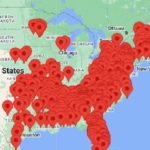 The National Census of Youth Law Enforcement Programs was funded by the DOJ COPS grant program.
Search the directory for programs near you – Click Here
Is your program is in the directory? If not: Click Here
Great Links
International LE Educators & Trainers Association (ILEETA) – is committed to the reduction of law enforcement risk through the enhancement of training for criminal justice practitioners. Their links page has some great resources: Click Here
Introduction to CJ Text from Open Textbook Library – Totally FREE! Worth using even for a small part: Click Here
Introduction to Criminal Investigation from Open Textbook Library – Totally FREE! Take a look at chapters: Click Here
Criminal Law from Open Textbook Library – Totally FREE! Take a look at chapters: Click Here
Ethics in Law Enforcement from Open Textbook Library – Totally FREE! Useful for some readings. Take a look at chapters: Click Here
Law and Justice – great materials and lessons for Criminal Justice. Requires registration to get everything – but FREE: Click Here
Legal Information Institute – Everything you need with Con Law, Law, SCOTUS, Civics and much more: Click Here
Federal Law Enforcement Training Centers YouTube Channel – Tons of videos. Good for classes, but also staying current in LE: Click Here
Competitions
The I&F pathway national CTSO is SkillsUSA. There are several ways for students to participate in SkillsUSA
For more information visit www.skillsusa.org/competitions or reach out to info@lapsen.org
Criminal Justice
This competition is a single competitor preparing to be officers or to work in other areas of criminal justice.
CSI Team
This competition for a team of 3 is designed to evaluate team members’ skills in processing a crime scene.
Career Pathways - Human Services
Student teams use their course of study as the basis of a project that will benefit their class, school, community or industry.
Commercial sUAS Drone
This competition for a team of 2 is designed to evaluate team members’ skills in the safe and efficient use of drone technology
Job Skill Demonstration - 3 Contests
Competitors demonstrate and explain an entry-level skill used in the occupational area for which they are training. “A” refers to skills taught in the pathway. “Open” is usually a skill learned in WBL or similar that is outside the pathway. “Action Skills” is for students with IEPs. In all cases, the skill should be hands on as it is a “demonstration.”
Robotics - Urban Search and Rescue
A student team designs and operates a robot that simulate equipment used in rescue operations.
There are dozens more that cover everything from speeches to specifc skill sets.
National Pathway Director
Jeff Branyon
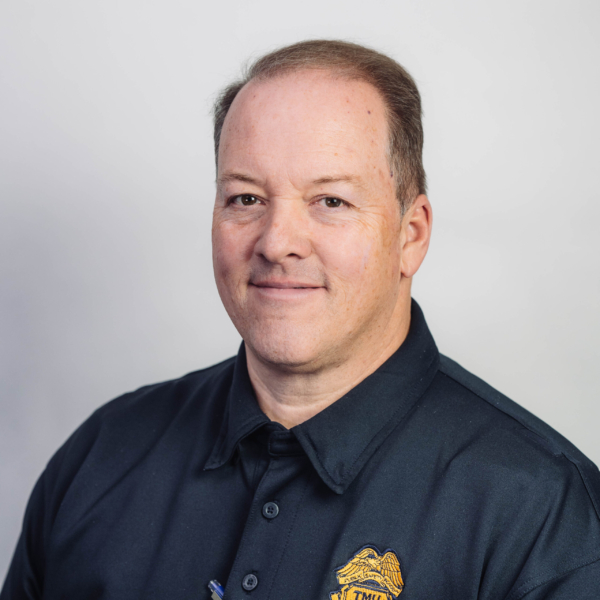
Jeff brings more than 35 years of law enforcement and forensic experience to the LAPSEN Law Enforcement Pathway. His career includes service as a Special Agent and Crime Scene Specialist with the Georgia Bureau of Investigation and leadership roles in local law enforcement. Jeff is an Assistant Professor of Criminal Justice and Director of the POST Academy at Truett McConnell University and holds a master’s degree in Public Safety Administration. He is also a graduate of the University of Tennessee’s National Forensic Academy.
Click Here for his LinkedIn
Email: le@lapsen.org