Legal Services Pathway
The Legal Services pathway introduces students to the law and the work of legal professionals. Students build a foundation in the court system, criminal and civil law, legal research and writing, and trial advocacy through activities such as mock trials. The coursework can prepare students for the Certified Legal Support Professional credential and entry-level legal support careers after graduation. It also gives students a starting point for further study in fields ranging from paralegal work to law.
This pathway is designed for Law and Justice CTE programs, legal concentration career academies and programs in humanities departments with legal concentrations.
Pathway at a Glance
Recommended Grades: 9–12
Program Length: 3–4 courses
Credential Opportunities: Certified Legal Support Professional (NALS) + Multiple Certifications and Micro-Credentials
Student Organization: SkillsUSA, Engage, Bar Associations Mock Trial Competions
Work-Based Learning: Law firms; corporate legal departments; courts and clerk’s offices; local, state, and federal government agencies; legal aid and public interest organizations; and other employers of paralegals, legal assistants, and legal support professionals.
Course 1 Introduction
- Introduction to Legal Services (ILS)
Course 2 & 3 Core
- Criminal Law (CrL)
- Civil Law (CvL)
Course 4 Extension Option
- Criminal & Constitutional Law (CCL)
Why This Pathway Is Designed This Way
LAPSEN’s Legal Services Pathway was developed with extensive input from attorneys, legal professionals, legal services practitioners, educators, and other industry leaders. Their input helped shape a pathway that stands apart from the other pathways in the law and public safety cluster. Legal services has its own body of knowledge, terminology, and professional skills that are not fully covered in the other pathways, so students need dedicated instruction.
The recommended sequence begins with Introduction to Legal Services, followed by Criminal Law and Civil Law. Together, these courses provide the instruction students need to prepare for the Certified Legal Support Professional (LSP) credential, an entry-level credential for students pursuing legal support work. The pathway introduces students to career opportunities such as paralegal, legal assistant, court clerk, and court reporter, while also building a foundation for further study toward careers as attorneys and judges.
LAPSEN recommends that students take the three courses in sequence. Constitutional and Criminal Law is recommended as a fourth course option for programs that want to extend students’ study of the legal system.
Introduction Course
Industry and advisory committees helped shape LAPSEN’s approach to the Legal Services Pathway. Because legal services has distinct content that does not align closely with the other law and public safety pathways, LAPSEN recommends a dedicated introduction course. Introduction to Legal Services gives students a foundation in the legal system, legal careers, research and writing, and trial advocacy while preparing them for the pathway’s core courses.
Introduction to Legal Services (ILS)
Recommended introductory course
Introduction to Legal Services introduces students to legal careers, the U.S. court system, and the core skills used in legal offices. Students practice legal research and writing, interpreting statutes and cases, professional communication, ethical decision-making, and workplace skills such as file management and calendaring. The course explores constitutional rights, civil and criminal law, pretrial procedures, trials, juries, and appeals. Through mock trials, students analyze case materials, develop legal arguments, examine witnesses, and present cases using professional courtroom practices. The course also prepares students for the Accredited Legal Professional (ALP) credential offered by NALS.
Standards & Course Guide | LAPSEN Lesson Plans | Course Resources
Core Courses
The core course serves as the anchor of each pathway, providing students with the essential knowledge and skills of that profession. It goes beyond career exploration to cover the key concepts, practices, and hands-on competencies students need at an appropriate depth to build a strong foundation for advanced coursework and career preparation.
Criminal Law (CrL)
Recommended core course
Criminal Law examines the laws, constitutional protections, and court procedures that shape criminal cases. Students learn to interpret statutes and case precedent, analyze criminal charges and defenses, and apply Fourth Amendment and Miranda standards to search, seizure, arrest, and interrogation scenarios. The course also covers pretrial hearings, motions, trials, sentencing, plea agreements, and appeals. Through legal research, writing, and mock trials, students practice building legal arguments, examining witnesses, and presenting cases. The course supports preparation for the Legal Support Professional (LSP) credential offered by NALS.
Standards & Course Guide | LAPSEN Lesson Plans | Course Resources
Civil Law (CvL)
Recommended core course
Civil Law explores how the legal system addresses disputes between individuals, businesses, and other parties. Students study civil legal careers and law office operations while developing skills in legal research, case analysis, professional writing, and oral argument. Coursework covers civil procedure and trial practice, alternative dispute resolution, and areas such as torts, contracts, intellectual property, family, probate, property, and insurance law. Students compare civil and criminal law and apply their learning through case analysis and civil mock trials. The course supports preparation for the Accredited Legal Professional (ALP) credential offered by NALS.
Standards & Course Guide | LAPSEN Lesson Plans | Course Resources
Extention Course
Constitutional and Criminal Law (CCL)
Recommended extension course
Criminal and Constitutional Law explores how constitutional protections shape criminal law and the justice system. Students study sources of legal authority, federal and state courts, the Bill of Rights, and criminal statutes, then apply those principles to search, arrest, interrogation, and trial scenarios. They build legal research, writing, and argument skills and put them into practice through mock trials. The course also examines emerging legal issues involving terrorism, drone surveillance, autonomous vehicles, and artificial intelligence. It supports preparation for the Accredited Legal Professional (ALP) credential offered by NALS.
Standards & Course Guide | LAPSEN Lesson Plans | Course Resources
Credentials & Certifications
Credentials matter because they give students a meaningful way to demonstrate their knowledge and skills beyond the classroom. LAPSEN works closely with industry partners, professional organizations, subject-matter experts, and educators to identify and support respected certifications and credentials that align with each pathway. Whether offered by LAPSEN or one of our partner organizations, we take credential quality and industry relevance seriously so students earn recognition that supports their next step in education or a career.
Explore our Credentials & Certifications page to learn more about industry-recognized credentials, certification opportunities, and LAPSEN’s credentialing partners.
Tier 1
These credentials require limited training — usually less than 5 hours — and focus on a specific set of skills. While valuable for building a foundation, these skills alone are not enough to secure employment. These are the lowest tier of credentials. Review the full microcredentials list.
LAPSEN Microcredentials Legal Service Sets
Under Development
Basic Set
Mid Set
Advance Set
Tier 2
Requiring 5 to 40 hours of training, these credentials combine multiple skills and demonstrate a student’s commitment to an area of learning. While they do not directly guarantee a job, they represent a significant step toward workforce readiness. Review more about Certifications.
- Microsoft Office Certifications
- NCRA Certifications
Tier 3
The highest level, these credentials reflect mastery in a specialized area, based on extensive training. They may be knowledge-based, skill-based, or a combination of both, and are often endorsed by national industry professional organizations. These credentials carry strong recognition with employers. Learn more about IRCs
Certified Legal Support Professional (LSP)
The National Association for Legal Support Professionals (NALS) is dedicated to providing meaningful, cost effective education for all levels of legal office personnel. They offer the LSP to credential those prepared to enter the legal field as legal assistants. Learn more about NALS – nals.org
NALS and LAPSEN have been working together to provide the best offering in legal services training for secondary and post-secondary education. The certificate is professional level while the instruction is appropriate for high schools and colleges.
The LSP satiates all Perkins legislative requirements for Industry Recognized Credentials.
Resources
 Training
Instructors in the LE pathway need to have industry experience or training. If you have a specific training need email info@lapsen.org
Click Here to go to our Training Schedule
 Career Posters
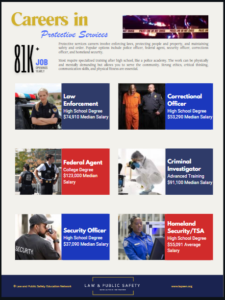
LAPSEN designed several career posters for instructors to download and print for their classrooms.
Click Here to go to download folder
Mock Trial

Many LS Programs participate in Mock Trial. LAPSEN supports the National High School Mock Trial Championship. We are exploring more options for partnership.
Click Here to learn more about mock trial competitions.
Student Recognition
Your students can be members of the National Technical Honors Society PLUS a special endorsement for achievement in law and public safety! Don’t have an NTHS? They are super easy to start and no extra work!
Click Here to learn more.
 Programs of Excellence
The national Industry Credentialed Program of Excellence (ICPE) is designed to make the best better. Applicant programs must demonstrate competencies across several standards. LAPSEN specialists assist applicant programs throughout the process with training, guides and mentorship.
Click Here to learn more. Do YOU have the BEST program?
National Program Directory
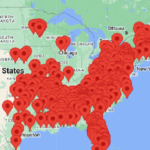 The National Census of Youth Law Enforcement Programs was funded by the DOJ COPS grant program.
Search the directory for programs near you – Click Here
Is your program is in the directory? If not: Click Here
Great Links
Criminal Law Text from Open Textbook Library – FREE textbook. Aimed at intro course in college, but still useful. Click Here
Bill of Rights Institute – Free lesson plans and TONS of resources: Click Here
The Constitution Project – Free videos on legal rights and case law. Short in duration – they fit easily into discussions: Click Here
The Annenberg Classroom – Tons of free stuff, games, lessons, and videos on Con Law: Click Here
The Judicial Learning Center – Focused on courts and the Supreme Court. Excellent lessons and resources – Click Here
Legal Information Institute – Everything you need with Con Law, Law, SCOTUS, Civics and much more: Click Here
Competitions
The LS pathway national CTSO is SkillsUSA. There is not an LS competition per se – but there are several competitions that students can choose from to participate in that support the SPS pathway content.
For more information visit www.skillsusa.org/competitions, lapsen.org/skillsusa-competitionsor reach out to info@lapsen.org
Speaking - 2 Different Contests
Individual students can compete in one of two speech contests. Prepared speech is much like opening statements lawyers make! The topic is announced in the fall. Extemporaneous speech is similar to closing arguements as they are prepared right before delivery. Both are great ways to prepare for a legal career.
Entrepreneurship
A team event testing students’ knowledge in starting their own businesses by developing business plans that identify needed products or services in a local market. LS careers require business acumen.
Criminal Justice
This competition is a single competitor preparing to be officers or to work in other areas of criminal justice. Legal related content is a part of the contest.
Customer Service
The competition evaluates students’ proficiency in providing customer service. This is one of the highest valued skills sets sought by LS employers.
Career Pathways - Human Services
Student teams use their course of study as the basis of a project that will benefit their class, school, community or industry. There are endless possibilites for this contest related to legal services.
Job Skill Demonstration - 3 Contests
Competitors demonstrate and explain an entry-level skill used in the occupational area for which they are training. “A” refers to skills taught in the pathway. “Open” is usually a skill learned in WBL or similar that is outside the pathway. “Action Skills” is for students with IEPs. In all cases, the skill should be hands on as it is a “demonstration.”
There are dozens more that cover everything from speeches to specifc skill sets.
National Legal Services Pathway Director
Will Hall, Esq.
Will brings experience as both a law instructor and a practicing attorney to the public law program for secondary students. As an active, licensed attorney, he combines practical legal experience with a passion for teaching and helping students develop a deeper understanding of the law, the legal system, and the role of attorneys in society. Will has additional experience as a mock trial coach and college instruction at BCTC, which respectively offer a diverse background in practical legal application, and high level academic curriculum development and delivery.
Email: law@lapsen.org